The Best North Carolina Fishing Charters
By LowCountry Coastal Excursions Team · Updated September 15, 2026
Key Takeaways
- North Carolina charters split three ways: inshore trips in the sounds and marshes, nearshore ocean trips, and long runs to the Gulf Stream for tuna, dolphin, wahoo and billfish.
- Where you book shapes the trip. The Outer Banks sit beside Cape Hatteras, where the Gulf Stream leaves the shelf; the southern hubs mix inshore and offshore trips.
- Licensing is often handled for you. A for-hire boat with a blanket license covers its paying passengers in coastal waters. A non-blanket boat does not, so ask before you go.
- What you can keep changes by the week. State size limits, bag limits and closed seasons apply on every trip.
- Driving further south? We run inshore and shark fishing charters out of Shem Creek in Mount Pleasant, near Charleston, SC. We do not run trips in North Carolina.
"The best North Carolina fishing charter" depends on your group, your dates and how far you want to ride. We're a Charleston, South Carolina fishing company, so this guide doesn't rate North Carolina operators. It explains how the trips, regions, seasons and rules work, so you can judge any captain's offer yourself.
What types of fishing charters run on the North Carolina coast?
North Carolina fishing charters come in three main forms: inshore trips in sounds and creeks, nearshore trips just off the beach, and offshore trips to the Gulf Stream. Each needs a different boat.
The state itself sorts for-hire boats by how they sell seats. In its license paperwork, the NC Division of Marine Fisheries (DMF) defines charter, head, guide and dive boats. The three that matter to anglers:
- Charter boat: typically hired per trip.
- Head boat: hired per person, so you may fish alongside other groups.
- Guide boat: typically under 30 feet, carrying a fishing guide and one or more anglers.
A private charter means your group sets the pace. A head boat sells individual seats, which can suit one or two anglers.
How do inshore and offshore charters differ?
Inshore charters fish protected water close to land, while offshore charters run into the open Atlantic after larger, faster fish.
Inshore trips work the sounds, marsh creeks, inlets and docks. Expect red drum, spotted seatrout, black drum and sheepshead. Offshore trips mean bigger boats, more fuel and a longer run before a line goes in. The reward is a shot at tuna, dolphin (mahi), wahoo and billfish. Nearshore trips land in between, often chasing Spanish and king mackerel.
How far offshore is the Gulf Stream from North Carolina?
The distance changes because the Gulf Stream's edge moves, and near Cape Hatteras it leaves the continental shelf and turns out to sea. Ask your captain where the warm water sits that week.
A 19-month study of the current off Cape Hatteras, published in the Journal of Geophysical Research: Oceans, recorded meanders that swing the stream's position on cycles shorter than 15 days. Run times from the same inlet can change week to week.
Where are the best places to book a North Carolina fishing charter?
Four common charter hubs are the Outer Banks, the Morehead City and Beaufort area, the Wrightsville Beach and Carolina Beach area near Wilmington, and Southport. Pick the region first, then the boat.
The table below is a planning map, not a ranking of any business.
| Region | Inshore water | Offshore access | Rule worth knowing |
|---|---|---|---|
| Outer Banks (Oregon Inlet, Hatteras) | Pamlico Sound and the inlets | Beside Cape Hatteras, where the Gulf Stream leaves the shelf | Black sea bass limits differ north and south of Cape Hatteras |
| Morehead City and Beaufort | Sounds, marsh and inlet water | Ocean inlet access for nearshore and offshore trips | DMF headquarters and one of its license offices |
| Wrightsville Beach and Carolina Beach | Marsh creeks and the waterway near Wilmington | Inlet access to nearshore and offshore water | South-of-Hatteras black sea bass limits apply |
| Southport | The Cape Fear River mouth and nearby creeks | Ocean access from the river mouth | The closest of these four hubs to South Carolina |
What sets the Outer Banks apart?
The Outer Banks stand out because they sit beside Cape Hatteras, where the Gulf Stream leaves the continental shelf. Oregon Inlet and Hatteras Inlet are two of the ocean inlets charter boats use there.
Behind the barrier islands sits Pamlico Sound, which offers sheltered inshore water when the ocean is rough. DMF sets a different black sea bass bag limit and season north of Cape Hatteras than south of it, so a bottom-fishing trip can follow different rules depending on which side of the cape it fishes.
How do Morehead City, Wrightsville Beach and Southport compare?
All three give you both inshore and ocean options, so the choice usually comes down to where you're staying and how far you'll drive.
- Morehead City and Beaufort: central coast, with DMF headquarters in Morehead City.
- Wrightsville Beach and Carolina Beach: easy if you're based around Wilmington.
- Southport: the Cape Fear River mouth, nearest South Carolina.
When is the best time to fish the North Carolina coast?
Mackerel and mahi are warm-season catches, while red drum and spotted seatrout run much longer seasons.
Which species show up in which months?
North Carolina Sea Grant lists king and Spanish mackerel from May to September, mahi from May to July, and tuna year-round.
North Carolina Sea Grant's seafood availability guide tracks when local catches are in season. It is built for seafood buyers, not anglers, so treat these as windows to ask about, not guarantees:
- King and Spanish mackerel: May through September
- Mahi-mahi (dolphinfish): May through July
- Red drum: March through December
- Tuna and spotted seatrout: year-round
- Wild striped bass: November through April
How do closed seasons change what you can keep?
A closed season means you cannot keep that species, even on a paid charter. Several popular North Carolina fish are on tight seasons or possession bans.
DMF's current recreational limits table lists flounder as open September 1 to 14, 2026, and closed, unlawful to possess, from September 15 to 30. Striped bass is closed or unlawful to possess in the Albemarle Sound and Central Southern management areas, while the ocean allows 1 fish a day between 28 and 31 inches. Since December 1, 2025, anyone harvesting red drum, flounder, spotted seatrout, striped bass or weakfish must also report the fish to DMF. If keeping dinner is the goal, check the rules for your exact dates.
Questions to ask before you book a North Carolina charter
Ask about trip length, boat size, what's included and the license the boat carries.
What drives the price of a North Carolina fishing charter?
Distance, trip length, boat size and whether the trip is private or shared drive most of the price. We don't quote NC prices because we found no public source we trust.
- Run distance and fuel. A Gulf Stream trip burns far more fuel than a morning in the sound.
- Trip length. Longer days cost more to run.
- Boat and group size. Even the state's blanket for-hire licenses are priced in two tiers: six or fewer passengers, or more than six.
- Private or per-person. A private charter bills the trip; a head boat bills each seat.
- Inclusions. Bait, tackle, ice, fish cleaning and licenses may be in the price or added on.
What should be included in the trip?
At minimum, confirm rods, reels, bait, tackle, safety gear and whether your fishing license is covered.
- Is the captain licensed by the U.S. Coast Guard? DMF lists a USCG license as required to operate a for-hire vessel.
- Does the boat carry a blanket or non-blanket for-hire license?
- Who cleans and bags the fish you keep?
- What is the weather and cancellation policy?
Do you need a fishing license on a North Carolina charter?
Often not, if the boat holds a blanket for-hire license, because that license covers paying passengers in coastal waters. On a non-blanket boat, each angler 16 or older needs a Coastal Recreational Fishing License.
What does a blanket for-hire license cover?
A blanket for-hire license covers the recreational license requirement for everyone fishing aboard, in coastal waters that are not joint or inland waters.
"Blanket licenses cover the individual licensing requirements of the paying passengers." NC Division of Marine Fisheries, For-Hire Fishing Licenses
According to the DMF for-hire license page, a for-hire license is required to take paying passengers fishing in coastal waters. The non-blanket vessel license is the cheaper option, and it leaves each passenger to buy their own Coastal Recreational Fishing License (CRFL). Anglers under 16 are exempt. Boats fishing federal waters, beyond three miles, may also need a federal charter permit for certain species. Inland waters fall under the NC Wildlife Resources Commission.
What size and bag limits apply on a charter?
Mostly the same DMF limits you would follow on your own boat, though a few species, such as bluefish, have separate for-hire limits. A blanket license covers the license, not the limits.
A few current examples from DMF's recreational size and bag limits table:
- Red drum: 18 to 27 inches total length, 1 per day
- Black drum: 14 to 25 inches, 10 per day
- Sheepshead: 14 inches minimum, 5 per day
- King mackerel: 24 inches fork length, 3 per day
- Dolphin (mahi): no minimum, 10 per day
- Blue or white marlin: 1 per vessel per trip, with minimum lengths
DMF changes these by proclamation, so recheck the week of your trip.
Driving the coast? How does a Charleston inshore charter compare?
If your trip continues into South Carolina, a Charleston inshore charter gives you the same sheltered-water style of fishing, run from Shem Creek in Mount Pleasant. Charleston is where we fish.
What does an LCCX inshore trip include?
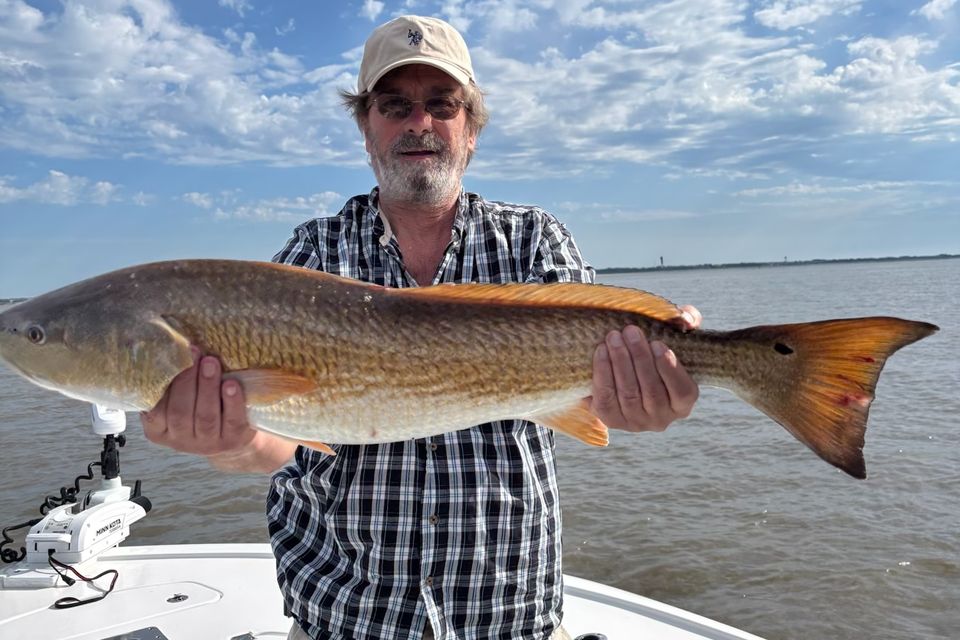
Our Charleston inshore fishing charters run 3 or 4 hours, private to your group, with gear, bait, tackle and licenses for every guest included. You bring sunscreen, a hat and snacks.
- 3 hours: $450 for 1 to 2 people, add $75 per person, up to 6 total per boat
- 4 hours: $550 for 1 to 2 people, add $75 per person, up to 6 total per boat
- Children 5 and under ride free but count toward the 6-guest capacity
- Included: fuel, rods and reels, bait, tackle, ice, bottled water and all fishing licenses.
- Where we fish: the Wando River, Charleston Harbor and tidal creeks
- What bites: red drum, black drum, flounder, sheepshead and spotted seatrout
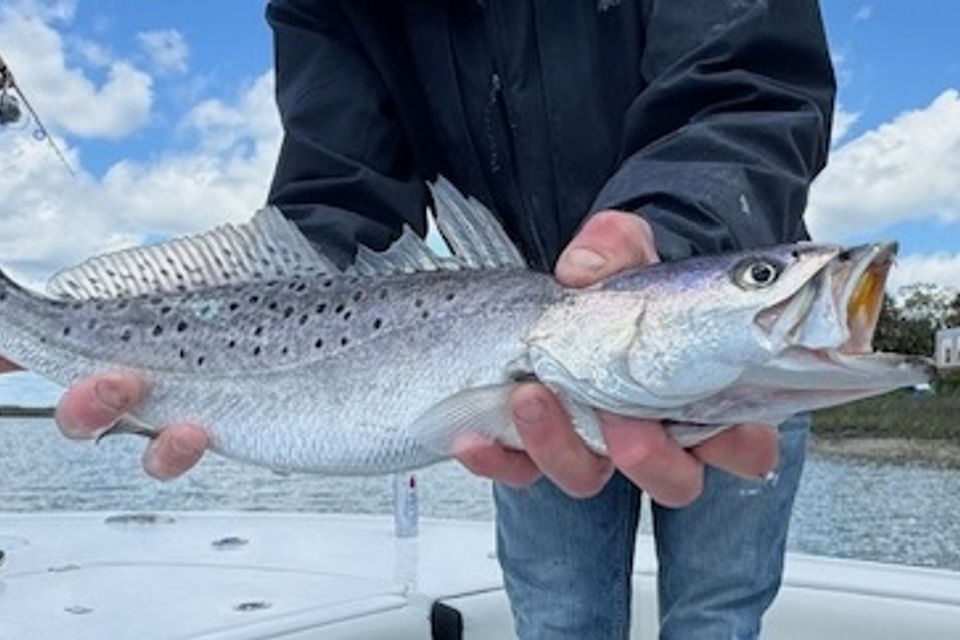
Spring and fall are our peak inshore seasons, but we fish year-round, and redfish are a good target any month. Our Charleston shark fishing charters run at the same rates in calm nearshore water, targeting blacktip, bonnethead, spinner and Atlantic sharpnose sharks. Younger anglers aged 7 to 13 can join our summer Youth Fish Camp on Shem Creek.
How do you book a fishing trip from Shem Creek?
Book online at least 24 hours ahead, or call (843) 508-1600 for anything sooner. Trips leave from 100 Church Street in Mount Pleasant, SC.
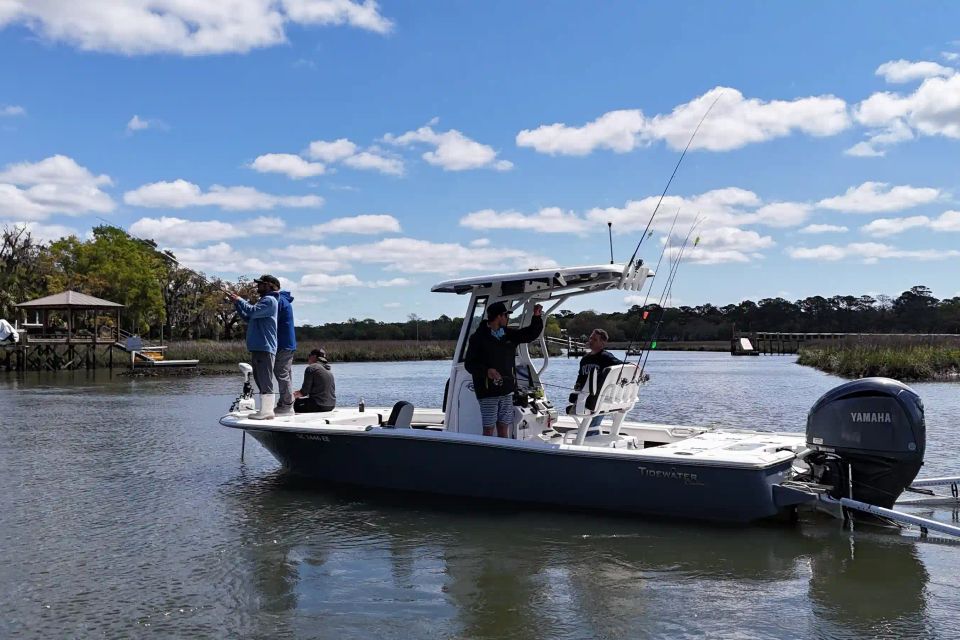
Our inshore fishing charters commonly go out on one of our center consoles, a 26' Tidewater or a 23' Key West; you can see them on our fleet page. When you're ready, pick a date on the LCCX booking page. Buying for someone else? A LowCountry Coastal Excursions gift card works too.